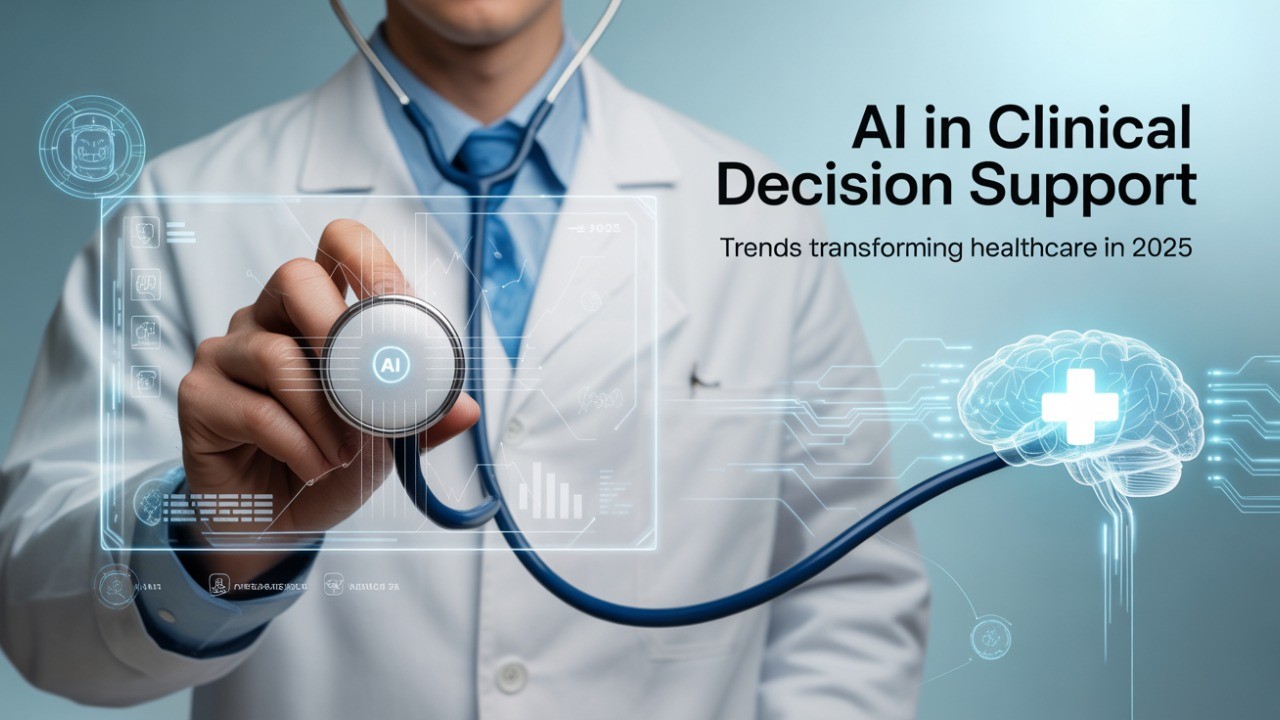
Artificial Intelligence (AI) is rapidly transforming the global healthcare industry. From disease diagnosis and predictive analytics to patient monitoring and personalized treatment recommendations, AI-powered technologies are helping healthcare organizations make faster, smarter, and more accurate decisions.
Healthcare systems generate massive amounts of data every day, including patient records, medical imaging, prescriptions, laboratory reports, wearable device data, and treatment histories. Traditional healthcare systems often struggle to process this information efficiently. Artificial intelligence solves this challenge by analyzing complex datasets in real time and delivering actionable insights that improve healthcare outcomes.
Modern AI-powered healthcare platforms are helping hospitals, clinics, healthcare providers, and medical startups automate workflows, reduce human error, improve operational efficiency, and support better clinical decision-making. As digital healthcare continues evolving, AI is becoming one of the most powerful technologies shaping the future of medicine.
Organizations looking to build intelligent healthcare solutions can explore professional digital health platform development to create scalable, AI-powered healthcare applications tailored for modern medical ecosystems.
The Growing Role of Artificial Intelligence in Healthcare
Healthcare organizations face multiple operational and clinical challenges, including:
- Increasing patient volumes
- Shortage of healthcare professionals
- Complex medical data management
- Diagnostic inaccuracies
- High operational costs
- Delayed treatment decisions
- Administrative inefficiencies
Artificial intelligence helps solve these challenges by automating data analysis, supporting clinical decisions, and improving healthcare workflows.
AI technologies used in healthcare include:
- Machine learning
- Natural language processing (NLP)
- Computer vision
- Predictive analytics
- Deep learning
- AI-powered automation
These technologies help healthcare providers make more informed decisions while improving patient care quality.
How AI Is Transforming Healthcare Decision-Making

1. Faster and More Accurate Disease Diagnosis
One of the biggest advantages of AI in healthcare is its ability to improve diagnostic accuracy. AI systems can analyze medical data and identify disease patterns faster than traditional manual processes.
AI-powered diagnostic systems help with:
- Medical image analysis
- Cancer detection
- Heart disease prediction
- Neurological disorder analysis
- Skin disease identification
- Radiology automation
AI algorithms can detect abnormalities in X-rays, MRIs, CT scans, and pathology reports with high precision, helping doctors make faster treatment decisions.
2. Predictive Analytics for Preventive Healthcare
Predictive analytics is one of the most powerful applications of AI in healthcare. AI systems analyze patient history, lifestyle data, and medical patterns to predict potential health risks before serious conditions develop.
Predictive AI can help identify:
- Risk of chronic diseases
- Hospital readmission probabilities
- Early signs of infections
- Cardiovascular complications
- Mental health risks
- Diabetes progression
This allows healthcare providers to focus on preventive care rather than only reactive treatment.
3. Personalized Treatment Recommendations
Every patient responds differently to treatments and medications. AI-powered healthcare systems analyze patient-specific data to create personalized treatment plans.
AI supports personalization through:
- Customized medication plans
- Personalized therapy recommendations
- Lifestyle-based healthcare suggestions
- Genetic data analysis
- Treatment effectiveness prediction
- Precision medicine support
Personalized healthcare improves treatment outcomes while reducing unnecessary medical interventions.
4. AI-Powered Clinical Decision Support Systems
Clinical Decision Support Systems (CDSS) use AI to help doctors make evidence-based medical decisions.
These systems can:
- Analyze patient symptoms
- Suggest possible diagnoses
- Recommend treatment options
- Detect medication conflicts
- Reduce medical errors
- Improve treatment planning
AI acts as a support tool for healthcare professionals, helping them make faster and more informed decisions.
5. Automation of Administrative Tasks
Healthcare organizations spend significant time managing administrative operations. AI automation improves efficiency by reducing repetitive manual work.
AI can automate:
- Appointment scheduling
- Medical billing
- Claims processing
- Patient record management
- Data entry tasks
- Insurance verification
- Workflow management
Automation reduces operational costs and allows healthcare staff to focus more on patient care.
Key Applications of AI in Healthcare
| AI Application | Healthcare Benefit |
|---|---|
| Medical Imaging Analysis | Improve diagnostic accuracy |
| Predictive Analytics | Identify health risks early |
| Virtual Health Assistants | Improve patient engagement |
| AI Chatbots | Provide instant patient support |
| Drug Discovery | Accelerate pharmaceutical research |
| Remote Patient Monitoring | Track patient health continuously |
| Clinical Decision Support | Assist healthcare professionals |
| Workflow Automation | Reduce administrative burden |
AI in Telemedicine and Remote Healthcare
Telemedicine platforms are increasingly integrating artificial intelligence to improve remote healthcare delivery.
AI enhances telemedicine through:
- Smart symptom checking
- AI-based triage systems
- Virtual health assistants
- Remote patient monitoring
- Automated appointment recommendations
- Health risk assessments
These technologies improve accessibility while supporting faster virtual healthcare services.
How AI Improves Patient Experience
Artificial intelligence not only supports healthcare professionals but also improves patient experiences significantly.
AI-powered healthcare platforms help patients through:
- 24/7 virtual assistance
- Faster diagnosis
- Reduced waiting times
- Personalized healthcare journeys
- Automated reminders
- Continuous health monitoring
- Easy access to medical information
Better patient experiences often lead to improved healthcare outcomes and stronger patient engagement.
Role of AI in Drug Discovery and Research
Developing new medicines traditionally requires years of research and massive investments. AI is accelerating pharmaceutical research by analyzing large datasets faster than traditional methods.
AI supports drug development by:
- Analyzing molecular structures
- Predicting drug interactions
- Identifying treatment candidates
- Reducing research timelines
- Improving clinical trial analysis
This helps pharmaceutical companies develop treatments more efficiently and cost-effectively.
AI and Remote Patient Monitoring
Remote patient monitoring systems powered by AI are becoming increasingly important for chronic disease management and preventive healthcare.
AI-enabled monitoring systems track:
- Heart rate
- Blood pressure
- Blood glucose levels
- Sleep quality
- Physical activity
- Respiratory patterns
Real-time monitoring allows healthcare providers to detect complications early and improve patient safety.
Benefits of Artificial Intelligence in Healthcare
| Benefit | Impact |
|---|---|
| Improved Accuracy | Reduce diagnostic errors |
| Faster Decision-Making | Accelerate treatment planning |
| Operational Efficiency | Automate healthcare workflows |
| Cost Reduction | Lower operational expenses |
| Personalized Healthcare | Improve patient outcomes |
| Preventive Care | Identify risks earlier |
| Scalable Healthcare Services | Support growing patient demands |
Challenges of AI Implementation in Healthcare
Although AI offers major advantages, healthcare organizations may face several challenges during implementation.
| Challenge | Solution |
|---|---|
| Data Privacy Concerns | Use secure encryption systems |
| High Implementation Costs | Adopt scalable cloud infrastructure |
| Regulatory Compliance | Follow healthcare regulations |
| Data Accuracy Issues | Use quality healthcare datasets |
| Resistance to Adoption | Provide staff training programs |
| System Integration Complexity | Develop flexible APIs |
Importance of Data Security in AI Healthcare Platforms
Healthcare data is highly sensitive and requires advanced security protection. AI healthcare platforms must maintain strong cybersecurity standards.
Essential security features include:
- End-to-end encryption
- HIPAA-compliant systems
- Secure cloud storage
- Role-based access control
- Multi-factor authentication
- Data backup and disaster recovery
- Secure API architecture
Strong security systems help healthcare organizations maintain patient trust and regulatory compliance.
Future Trends of AI in Healthcare
Artificial intelligence will continue reshaping healthcare through advanced automation and intelligent decision-making systems.
Future healthcare AI trends include:
- AI-powered robotic surgery
- Advanced predictive healthcare
- Digital twins in medicine
- Voice-enabled healthcare systems
- AI-assisted mental healthcare
- Wearable AI diagnostics
- Smart hospital ecosystems
- Real-time population health analytics
Healthcare organizations that adopt AI technologies early can gain strong operational and competitive advantages.
Why Healthcare Businesses Should Invest in AI Solutions
The healthcare industry is becoming increasingly data-driven and technology-focused. AI helps healthcare businesses improve patient care quality while increasing efficiency and reducing operational challenges.
Investing in AI healthcare development helps organizations:
- Improve diagnostic accuracy
- Reduce operational costs
- Enhance patient experiences
- Support preventive healthcare
- Optimize clinical workflows
- Enable scalable healthcare services
- Strengthen healthcare innovation
As healthcare systems continue evolving digitally, AI will remain at the center of future medical innovation.
Build AI-Powered Healthcare Solutions with Developers App India BM Coder
Developers App India BM Coder specializes in building secure, scalable, and intelligent healthcare software solutions powered by modern artificial intelligence technologies.
Our expertise includes:
- AI healthcare app development
- Telemedicine platform development
- Healthcare analytics systems
- Remote patient monitoring platforms
- AI-powered chatbots
- Healthcare CRM solutions
- Medical workflow automation
- Custom healthcare software development
We help healthcare businesses develop advanced digital healthcare ecosystems that improve clinical decision-making, patient engagement, and operational efficiency.
Email: [email protected]
WhatsApp: +91.9586979730
Conclusion
Artificial intelligence is transforming healthcare decision-making by improving diagnostics, predictive analytics, workflow automation, personalized medicine, and patient engagement. AI-powered healthcare systems help providers make faster, smarter, and more accurate decisions while enhancing operational efficiency and healthcare accessibility.
From remote patient monitoring and telemedicine to AI-driven clinical support systems and predictive healthcare analytics, artificial intelligence is reshaping the future of modern medicine.
Healthcare organizations investing in AI technologies today can create smarter healthcare ecosystems that improve patient outcomes, reduce operational complexity, and support long-term healthcare innovation. As digital transformation continues accelerating across the healthcare industry, AI will remain one of the most powerful drivers of medical advancement worldwide.
Blog ID: 1533Author: parth
Date: 08-05-2026
We to code. It's our passion








you can also reach us at our given
email address or phone number.