
The healthcare industry is undergoing a rapid digital transformation, driven by the need to improve patient care, reduce operational inefficiencies, and ensure compliance with regulatory standards. Custom healthcare software has emerged as a powerful solution to address these challenges by providing tailored systems that align with the unique workflows of hospitals, clinics, and healthcare providers.
In this blog, we will explore how custom healthcare software enhances clinical efficiency and improves patient outcomes while providing insights into its benefits, features, and implementation strategies.
What is Custom Healthcare Software?
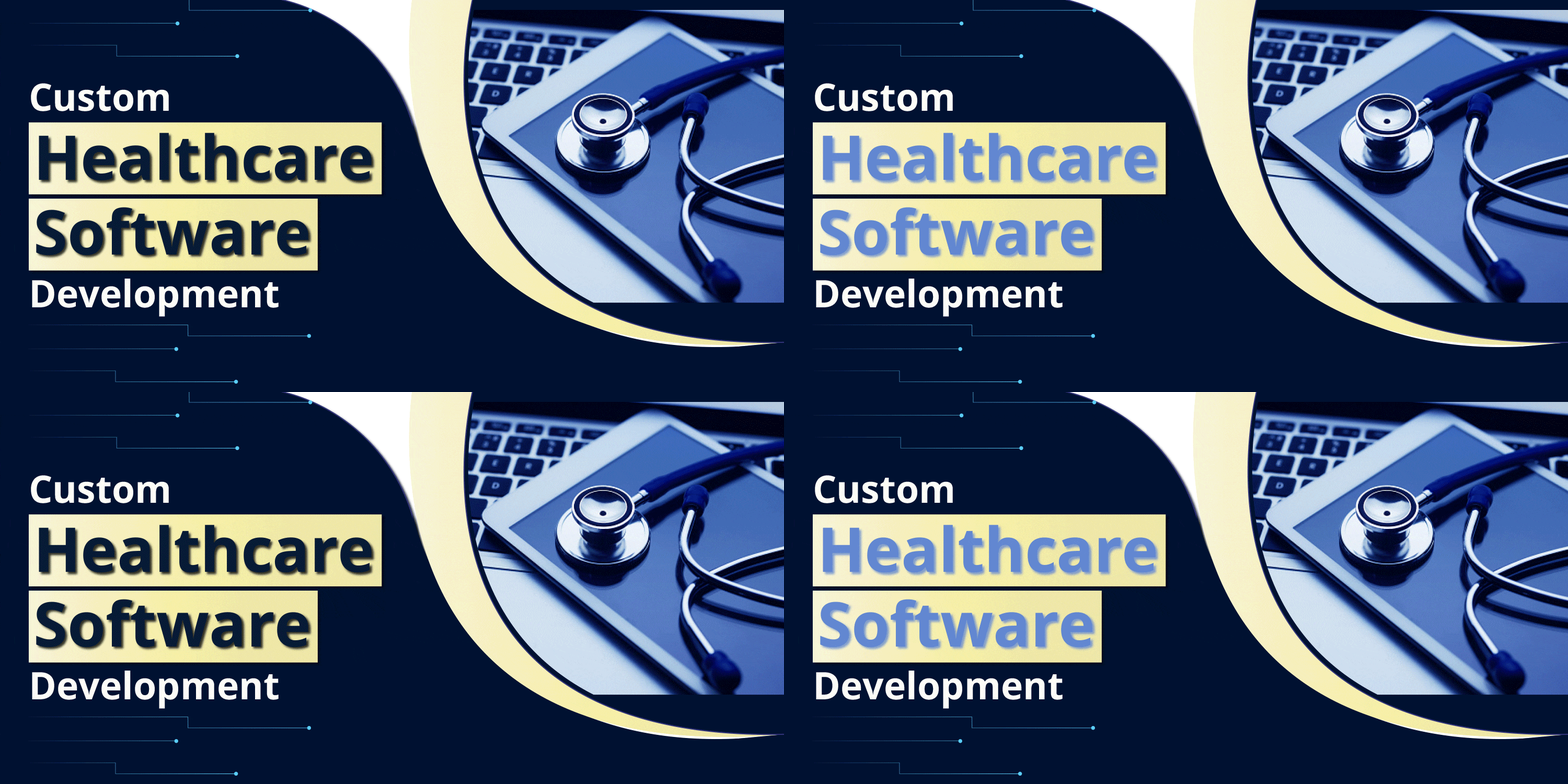
Custom healthcare software refers to tailor-made digital solutions designed specifically for healthcare organizations. Unlike off-the-shelf solutions, custom software is built to match the exact needs of a healthcare provider, enabling seamless integration with existing systems and workflows.
If you're looking for a reliable healthcare software development company, choosing a team that understands healthcare workflows, compliance requirements, and scalability is essential for long-term success.
Why Healthcare Needs Custom Software
| Challenge | Impact | Custom Software Solution |
|---|---|---|
| Manual processes | Time-consuming and error-prone | Automation of workflows |
| Data silos | Limited patient insights | Integrated data systems |
| Poor communication | Delayed treatments | Real-time communication tools |
| Compliance issues | Legal risks | Built-in compliance frameworks |
Key Benefits of Custom Healthcare Software
1. Improved Clinical Efficiency
Custom healthcare systems streamline daily operations by automating repetitive tasks such as patient registration, appointment scheduling, billing, and reporting. This allows healthcare professionals to focus more on patient care instead of administrative work.
2. Enhanced Patient Outcomes
Access to real-time patient data enables doctors to make faster and more accurate decisions, leading to improved treatment outcomes.
3. Seamless Integration
Custom software integrates easily with existing systems such as Electronic Health Records (EHR), lab systems, and pharmacy management tools.
4. Scalability
As healthcare organizations grow, custom software can be scaled to accommodate new users, features, and locations.
5. Better Data Security
Custom solutions are built with advanced security protocols to protect sensitive patient information and ensure compliance with healthcare regulations.
Core Features of Custom Healthcare Software
| Feature | Description |
|---|---|
| Electronic Health Records (EHR) | Centralized patient data management |
| Appointment Scheduling | Automated booking and reminders |
| Telemedicine | Virtual consultations and remote care |
| Billing & Payments | Automated invoicing and payment tracking |
| Analytics Dashboard | Data-driven insights for decision-making |
| Patient Portal | Access to records, reports, and communication |
How Custom Software Improves Clinical Workflow

1. Automation of Administrative Tasks
By automating tasks such as appointment booking and billing, healthcare providers can significantly reduce administrative burden.
2. Real-Time Data Access
Doctors and staff can access patient data instantly, leading to faster diagnosis and treatment.
3. Reduced Errors
Automated systems minimize human errors in prescriptions, billing, and record-keeping.
4. Improved Collaboration
Custom systems enable seamless communication between doctors, nurses, and administrative staff.
Use Cases of Custom Healthcare Software
- Hospital Management Systems
- Clinic Management Software
- Telemedicine Platforms
- Pharmacy Management Systems
- Laboratory Information Systems
- Remote Patient Monitoring Apps
Technology Stack Used in Healthcare Software
| Layer | Technologies |
|---|---|
| Frontend | React, Angular, Vue |
| Backend | Node.js, Python, .NET |
| Database | MongoDB, PostgreSQL, MySQL |
| Cloud | AWS, Azure, Google Cloud |
| Security | OAuth, JWT, SSL Encryption |
Challenges in Healthcare Software Development
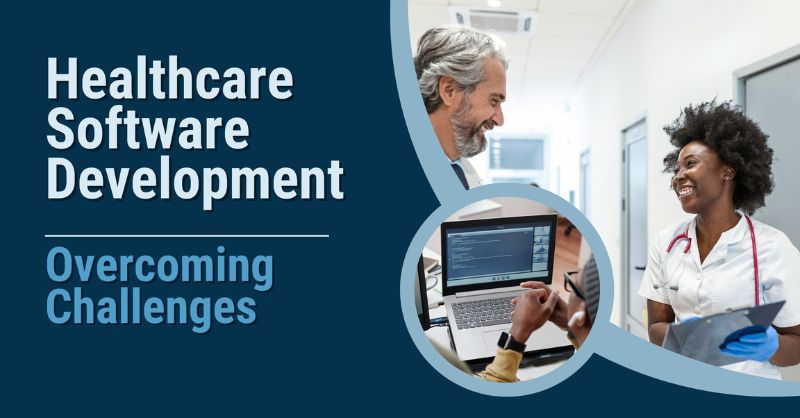
- Regulatory compliance (HIPAA, GDPR)
- Data security concerns
- Integration with legacy systems
- User adoption and training
- High initial development cost
Best Practices for Developing Healthcare Software
- Understand clinical workflows
- Ensure regulatory compliance
- Focus on user-friendly UI/UX
- Implement strong security measures
- Use scalable architecture
- Test thoroughly before deployment
Future Trends in Healthcare Software
- AI-powered diagnostics
- Blockchain for data security
- IoT-enabled remote monitoring
- Cloud-based healthcare systems
- Predictive analytics for patient care
Conclusion
Custom healthcare software is no longer a luxury but a necessity for modern healthcare organizations. By improving clinical efficiency, reducing errors, and enhancing patient outcomes, it plays a critical role in transforming healthcare delivery.
Investing in custom solutions ensures long-term scalability, better data management, and improved patient satisfaction.
📞 Call to Action
Looking to build a custom healthcare solution tailored to your needs?
📧 Email: [email protected]
📱 WhatsApp: +91.9586979730
Connect with Developers App India BM Coder today and transform your healthcare business with innovative and scalable software solutions.
Blog ID: 1488Author: parth
Date: 25-04-2026
We to code. It's our passion







you can also reach us at our given
email address or phone number.