
The healthcare industry across the Middle East is rapidly embracing digital transformation. Governments, hospitals, clinics, healthcare startups, and private healthcare providers are investing heavily in digital health platforms to improve patient care, modernize healthcare infrastructure, and create more accessible healthcare systems.
Countries such as the UAE, Saudi Arabia, Qatar, Bahrain, Kuwait, and Oman are actively promoting healthcare innovation through smart healthcare initiatives, digital health strategies, and technology-driven patient care systems.
From telemedicine applications and AI-powered healthcare platforms to healthcare mobile apps and remote patient monitoring systems, digital healthcare technologies are helping organizations deliver faster, smarter, and more efficient healthcare services.
At Developers App India, we help healthcare organizations build scalable, secure, and modern digital healthcare solutions tailored for evolving healthcare markets. Our expertise in healthcare app development services for the Middle East supports healthcare providers in building patient-focused healthcare ecosystems powered by modern technology.
Why Digital Healthcare Is Expanding Rapidly Across the Middle East
Several factors are driving digital healthcare growth in the Middle East:
- Rapid urbanization
- Growing healthcare demands
- Government digital transformation initiatives
- Increasing smartphone and internet penetration
- Need for remote healthcare access
- Rising investment in healthcare infrastructure
- Demand for better patient experiences
Healthcare systems in the region are working toward improving accessibility, efficiency, and healthcare quality while reducing operational burdens.
Digital healthcare platforms help achieve these goals by:
- Automating healthcare workflows
- Improving patient communication
- Supporting remote care delivery
- Enhancing healthcare data management
- Reducing patient waiting times
- Improving healthcare accessibility
Major Digital Health Solutions Used Across the Middle East
| Digital Health Platform | Primary Purpose | Key Benefits |
|---|---|---|
| Telemedicine Platforms | Virtual doctor consultations | Convenient healthcare access |
| Healthcare Mobile Apps | Patient engagement and healthcare management | Improved patient experience |
| Electronic Health Records (EHR) | Digital patient record management | Centralized healthcare data |
| Remote Patient Monitoring | Track patient health remotely | Better chronic care management |
| AI Healthcare Platforms | Healthcare automation and analytics | Improved clinical efficiency |
| Healthcare CRM Systems | Patient communication management | Enhanced patient engagement |
| Healthcare Analytics Platforms | Data-driven healthcare planning | Operational optimization |
Telemedicine Is Transforming Healthcare Accessibility
Telemedicine has become one of the fastest-growing healthcare technologies across the Middle East.
Virtual healthcare platforms allow patients to:
- Book appointments online
- Consult doctors remotely
- Access healthcare services from home
- Receive digital prescriptions
- Communicate securely with healthcare professionals
Telemedicine is especially valuable in regions where patients may have limited access to specialized healthcare services.
Benefits for healthcare providers include:
- Reduced hospital overcrowding
- Better appointment management
- Expanded patient reach
- Improved operational efficiency
- Lower infrastructure pressure
Patients benefit from faster healthcare access, reduced travel requirements, and greater convenience.
Government Initiatives Supporting Digital Healthcare
Governments across the Middle East are actively promoting healthcare digitalization through smart city initiatives and national healthcare transformation programs.
Countries are investing in:
- Digital hospitals
- National healthcare databases
- AI healthcare innovation
- Cloud healthcare infrastructure
- Smart patient management systems
- Digital public health services
These initiatives aim to modernize healthcare systems while improving healthcare accessibility and efficiency for growing populations.
Electronic Health Records Improve Healthcare Coordination
Electronic Health Record systems are helping healthcare providers manage patient information more effectively.
EHR platforms enable healthcare professionals to:
- Access patient records instantly
- Reduce paperwork
- Improve treatment coordination
- Enhance diagnosis accuracy
- Support faster healthcare delivery
Healthcare organizations can securely share patient information between departments, laboratories, pharmacies, and specialists.
Digital record systems improve both clinical efficiency and patient safety.
Healthcare Mobile Apps Improve Patient Engagement
Healthcare mobile applications are becoming an important part of digital healthcare ecosystems across the Middle East.
Patients increasingly prefer mobile-first healthcare experiences for convenience and accessibility.
Healthcare mobile apps commonly provide:
- Appointment scheduling
- Telemedicine integration
- Medication reminders
- Health tracking
- Access to medical reports
- Secure messaging
- Digital payments
Mobile healthcare apps improve communication between patients and healthcare providers while increasing patient participation in healthcare management.
Remote Patient Monitoring Supports Better Chronic Care
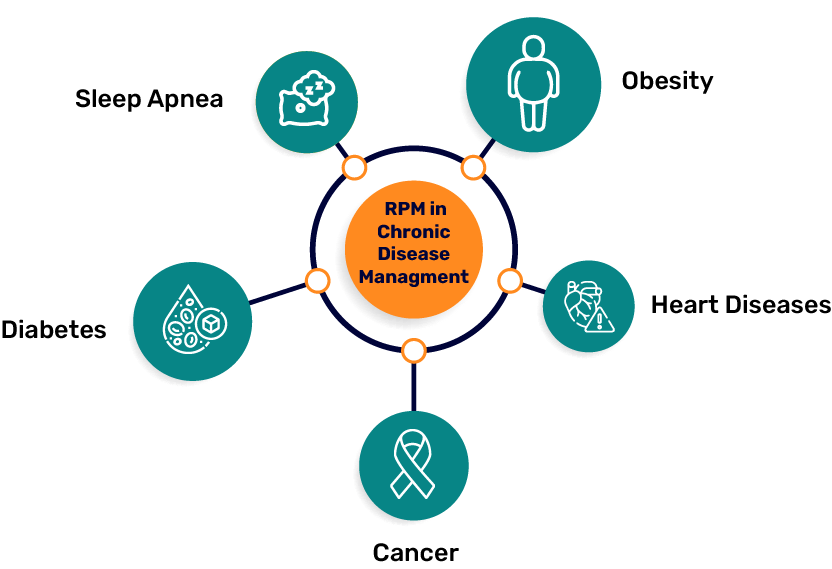
Remote Patient Monitoring (RPM) solutions are helping healthcare providers manage chronic diseases more efficiently.
RPM systems collect patient health data using connected medical devices such as:
- Smart wearable devices
- Blood pressure monitors
- Heart rate sensors
- Glucose monitoring devices
- Pulse oximeters
Healthcare providers can monitor patients remotely and respond quickly when health conditions change.
| RPM Benefit | Healthcare Impact |
|---|---|
| Continuous monitoring | Early detection of health issues |
| Reduced hospital visits | Lower operational costs |
| Improved patient engagement | Better treatment adherence |
| Remote healthcare support | Greater convenience for patients |
Artificial Intelligence Is Advancing Healthcare Innovation
Artificial Intelligence is playing an increasingly important role in digital healthcare growth across the Middle East.
Healthcare providers use AI for:
- Medical imaging analysis
- Predictive healthcare analytics
- Patient risk assessment
- Healthcare workflow automation
- Virtual healthcare assistants
- Clinical decision support
AI technologies help healthcare organizations improve efficiency, reduce administrative workload, and support faster medical decision-making.
AI-powered systems also help healthcare providers analyze large healthcare datasets for improved planning and operational optimization.
Cloud Technology Enables Scalable Healthcare Systems
Cloud computing has become essential for modern healthcare infrastructure across the Middle East.
Cloud-based healthcare platforms allow organizations to:
- Store healthcare data securely
- Scale healthcare services efficiently
- Support remote healthcare access
- Improve system reliability
- Reduce infrastructure maintenance costs
- Enable healthcare system integration
Cloud healthcare infrastructure also supports multi-location healthcare operations, making it easier for organizations to manage distributed healthcare networks.
Importance of Healthcare Cybersecurity and Compliance
Healthcare organizations handle highly sensitive patient data, making cybersecurity a critical component of digital healthcare systems.
Healthcare software platforms must include:
- Secure authentication systems
- End-to-end data encryption
- Role-based access control
- Regular security monitoring
- Backup and disaster recovery systems
- Secure cloud hosting environments
Healthcare providers must also comply with regional healthcare data regulations and privacy standards.
Secure healthcare software development helps maintain patient trust while reducing risks related to cyber threats and data breaches.
Healthcare Analytics Improve Operational Efficiency
Healthcare analytics platforms allow organizations to make data-driven decisions using real-time healthcare insights.
Healthcare analytics solutions help providers:
- Predict patient demand
- Optimize staffing
- Track healthcare performance
- Improve patient outcomes
- Reduce operational inefficiencies
- Enhance long-term planning
Data-driven healthcare management is becoming increasingly important as healthcare systems continue scaling across the region.
Benefits of Digital Health Platforms Across the Middle East
| Benefit | Description |
|---|---|
| Improved Accessibility | Patients receive healthcare services more conveniently |
| Operational Efficiency | Automation reduces manual administrative tasks |
| Better Patient Engagement | Digital platforms improve communication and participation |
| Scalable Healthcare Services | Healthcare organizations can expand operations efficiently |
| Reduced Healthcare Costs | Remote healthcare lowers infrastructure pressure |
| Improved Clinical Outcomes | Technology supports better healthcare decisions |
| Enhanced Data Management | Centralized healthcare records improve coordination |
Challenges in Healthcare Digital Transformation
Integration with Legacy Systems
Many healthcare organizations still use older systems that can be difficult to integrate with modern healthcare technologies.
Healthcare Staff Training
Medical professionals require proper training to adopt new digital healthcare systems effectively.
Cybersecurity Risks
Healthcare systems are frequent targets for cyberattacks due to the value of healthcare data.
Infrastructure Investment
Large-scale digital healthcare implementation requires significant financial investment.
Regulatory Compliance
Healthcare organizations must ensure compliance with evolving healthcare data and privacy regulations.
Future Trends in Middle East Digital Healthcare

Smart Hospitals
Healthcare providers are investing in smart hospitals powered by automation, AI, IoT, and connected healthcare devices.
AI-Powered Personalized Healthcare
AI technologies will continue improving personalized treatment planning and predictive healthcare services.
Expansion of Telemedicine
Virtual healthcare services will continue expanding across urban and remote regions.
Wearable Healthcare Technology
Wearable devices will support preventive healthcare and real-time patient monitoring.
Integrated Digital Healthcare Ecosystems
Healthcare organizations will increasingly connect hospitals, laboratories, pharmacies, insurance systems, and patients into unified digital ecosystems.
Why Custom Healthcare Software Development Matters
Every healthcare provider operates with unique workflows, patient requirements, and operational goals.
Custom healthcare software development allows organizations to:
- Create scalable healthcare systems
- Improve workflow efficiency
- Enhance patient experiences
- Integrate with existing healthcare systems
- Support long-term digital growth
- Improve operational flexibility
Custom-built healthcare applications provide greater scalability, security, and adaptability compared to generic software platforms.
How Developers App India BM Coder Supports Healthcare Providers
Developers App India BM Coder develops advanced healthcare technology solutions tailored for healthcare organizations across the Middle East.
Our healthcare development services include:
- Healthcare mobile app development
- Telemedicine platform development
- Hospital management software
- Remote patient monitoring systems
- Healthcare CRM development
- Patient portal development
- Healthcare dashboard systems
- AI healthcare solutions
- Cloud healthcare platform development
We focus on delivering scalable, secure, user-friendly, and high-performance healthcare software solutions that support modern healthcare transformation.
Ready to Build a Scalable Digital Healthcare Platform?
If you are planning to develop advanced digital healthcare solutions for hospitals, clinics, healthcare startups, or enterprise healthcare systems across the Middle East, Developers App India BM Coder can help you build secure and future-ready healthcare platforms.
Our healthcare software development team specializes in building modern digital healthcare solutions designed for scalable healthcare growth.
Email: [email protected]
WhatsApp: +91.9586979730
Conclusion
Digital health platforms are rapidly transforming healthcare systems across the Middle East by improving accessibility, operational efficiency, patient engagement, and healthcare outcomes.
From telemedicine and AI-powered healthcare systems to healthcare mobile applications and remote patient monitoring platforms, healthcare providers are investing heavily in technology-driven healthcare transformation.
Organizations that adopt scalable healthcare technologies today will be better positioned to meet future healthcare demands while delivering smarter and more patient-focused healthcare services.
The future of healthcare in the Middle East is digital, connected, intelligent, and innovation-driven — and modern healthcare platforms are leading this transformation.
Blog ID: 1541Author: parth
Date: 08-05-2026
We to code. It's our passion







you can also reach us at our given
email address or phone number.