Android has become the most widely used mobile operating system in the world, powering billions of smartphones and tablets. For businesses, this massive user base presents a huge opportunity to reach customers through mobile applications. However, building an Android application that performs smoothly for millions of users requires much more than just writing code. It requires scalable architecture, optimized performance, strong security practices, and modern development frameworks.
From global startups to large enterprises, companies depend on Android apps to provide digital services, improve customer engagement, and scale their operations. Whether it's an e-commerce platform, a fintech application, a social media app, or a logistics solution, the success of an Android application depends heavily on its performance, stability, and ability to handle high user traffic.
If you are looking for a professional Android app development company that can build scalable and high-performance applications, understanding the technologies and development strategies behind successful Android apps is essential.
This comprehensive guide explains how high-performance Android applications are designed, developed, optimized, and deployed to support millions of users worldwide.
The Growing Importance of High-Performance Android Applications
With the rapid growth of smartphone usage, mobile apps have become a key channel for business operations and customer interaction. Android dominates the global smartphone market, making it a crucial platform for businesses that want to reach a large audience.
However, users today expect apps to be fast, responsive, and reliable. If an application loads slowly or crashes frequently, users will quickly uninstall it. This is why performance optimization is a critical part of Android app development.
| Key Android App Performance Factors | Impact on User Experience |
|---|---|
| Fast App Launch Time | Improves first impressions and user retention |
| Responsive UI | Smooth navigation and interaction |
| Efficient Memory Usage | Prevents crashes and lag |
| Optimized Network Calls | Faster data loading |
| Scalable Backend | Handles millions of users efficiently |
Understanding the Android Development Ecosystem
Android applications are typically developed using modern programming languages and powerful development tools provided by Google. Developers rely on these tools to build secure, scalable, and high-performing applications.
| Technology | Purpose |
|---|---|
| Kotlin | Primary language for modern Android development |
| Java | Traditional Android programming language |
| Android Studio | Official integrated development environment (IDE) |
| Jetpack Libraries | Reusable components for faster development |
| Firebase | Backend services and real-time databases |
These technologies provide the foundation for building high-quality Android applications capable of supporting large-scale user bases.
Step 1: Strategic Planning and App Architecture
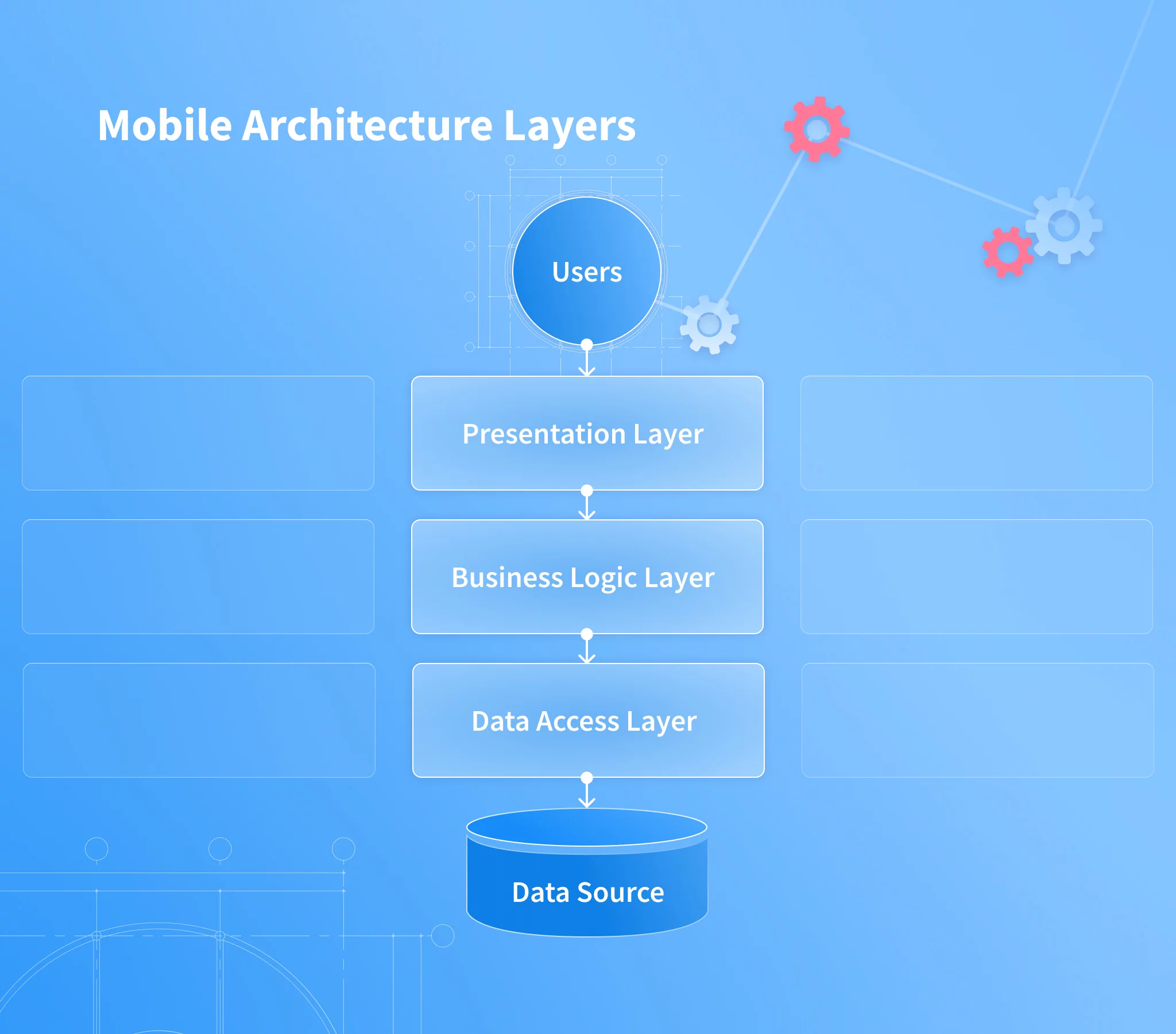
High-performance Android applications begin with a well-planned architecture. Developers must design the app in a way that supports scalability, maintainability, and performance.
Choosing the right architecture ensures that the application can handle growing user traffic without performance issues.
Popular Android app architecture patterns include:
- Model-View-ViewModel (MVVM)
- Model-View-Presenter (MVP)
- Clean Architecture
| Architecture Pattern | Benefits |
|---|---|
| MVVM | Improves separation of concerns |
| MVP | Enhances code testability |
| Clean Architecture | Highly scalable and maintainable systems |
Step 2: Efficient UI and UX Design
User interface and user experience design play a major role in application performance. A poorly designed interface can slow down the app and create usability issues.
Modern Android apps use responsive design principles to ensure consistent experiences across different screen sizes and device types.
Key UI/UX best practices include:
- Minimalistic interface design
- Fast-loading screens
- Optimized image assets
- Adaptive layouts for multiple devices
By following these practices, developers can ensure smooth interaction for users even under heavy app usage.
Step 3: Scalable Backend Infrastructure
A high-performance Android application requires a strong backend infrastructure capable of handling large volumes of requests from users.
Cloud-based backend systems allow applications to scale automatically as the user base grows.
| Backend Component | Function |
|---|---|
| API Gateways | Connect mobile apps with server services |
| Cloud Servers | Host application data and services |
| Database Systems | Store user and application data |
| Authentication Services | Secure user accounts |
Popular cloud platforms used for Android applications include AWS, Google Cloud, and Microsoft Azure.
Step 4: Performance Optimization Techniques

Developers use multiple techniques to ensure Android apps remain fast and responsive.
Key optimization strategies include:
- Reducing app startup time
- Using background processing efficiently
- Optimizing network calls
- Minimizing battery consumption
- Efficient memory management
| Optimization Area | Strategy |
|---|---|
| App Startup | Load only essential components |
| Network Calls | Use caching and compression |
| Images | Use optimized image formats |
| Data Storage | Use efficient local databases |
Step 5: Handling Millions of Users with Scalable Systems
When an Android application gains popularity, the number of users can grow rapidly. To support millions of users, developers implement scalable systems.
Important scalability practices include:
- Load balancing
- Distributed databases
- Content delivery networks (CDN)
- Microservices architecture
These technologies distribute the workload across multiple servers, ensuring that applications remain stable even during peak traffic periods.
Step 6: Security and Data Protection
Security is a critical aspect of Android application development, especially when apps handle sensitive user information.
Developers implement multiple security measures to protect data and prevent unauthorized access.
| Security Feature | Purpose |
|---|---|
| Data Encryption | Protect user data during transmission |
| Secure Authentication | Verify user identities |
| API Security | Prevent unauthorized access |
| Regular Security Updates | Protect against new threats |
Step 7: Continuous Testing and Quality Assurance
Testing is essential to ensure the application performs reliably across different Android devices and operating system versions.
Android apps must be tested on multiple devices to ensure compatibility and stability.
Testing types include:
- Unit testing
- Performance testing
- Security testing
- Device compatibility testing
- User acceptance testing
Industries That Depend on High-Performance Android Apps

Many industries rely heavily on Android applications to provide digital services to millions of users.
- E-commerce platforms
- Fintech and digital banking
- Healthcare and telemedicine
- Food delivery services
- Ride-sharing platforms
- Education and e-learning
These industries require applications that are scalable, secure, and capable of handling large user traffic.
Why Businesses Choose Developers App India BM Coder
Developers App India BM Coder is a trusted software development company specializing in high-performance Android application development.
Our team builds scalable mobile applications that deliver seamless user experiences while supporting rapid business growth.
Our Android development services include:
- Custom Android application development
- UI/UX design
- Backend development and API integration
- Cloud deployment
- Performance optimization
- Post-launch maintenance and updates
🚀 Build a High-Performance Android Application
Looking for expert developers to build a scalable Android app for your business?
Developers App India BM Coder helps startups and enterprises create powerful Android applications that support millions of users.
Email: [email protected]
WhatsApp: +91 9586979730
Contact us today to discuss your Android app development project.
Future Trends in Android App Development
The Android ecosystem continues to evolve with new technologies that enhance performance and user experience.
| Trend | Impact |
|---|---|
| Artificial Intelligence | Smart app features and personalization |
| 5G Connectivity | Faster mobile app performance |
| Edge Computing | Reduced latency for mobile services |
| AR and VR Integration | Immersive mobile experiences |
Conclusion
Building a high-performance Android application capable of supporting millions of users requires strategic planning, advanced technologies, scalable architecture, and continuous optimization. From UI design and backend infrastructure to security and performance tuning, every aspect of development must be carefully executed.
Businesses that invest in professional Android app development can deliver seamless digital experiences, reach larger audiences, and scale their operations effectively.
If you are planning to launch a high-performance Android application, partnering with an experienced development company can help turn your vision into a powerful and scalable mobile solution.
Blog ID: 1115Author: parth
Date: 17-03-2026
We to code. It's our passion









you can also reach us at our given
email address or phone number.