
Despite the rise of modern languages like Kotlin, Java continues to be the backbone of Android application development. For over a decade, Java has powered millions of Android apps, providing reliability, maintainability, and robust performance. Its stability and vast ecosystem make it an enduring choice for enterprises and developers worldwide.
For businesses seeking expert Java-based Android development, partnering with Developers App India ensures that apps are built using best practices, scalable architecture, and industry-grade security. Explore our Java Android app development to build reliable, high-performance mobile solutions.
Why Java Remains Relevant for Android Development
Java has several characteristics that continue to make it a preferred language for Android apps:
- Proven reliability and stability for large-scale applications
- Extensive library support and mature frameworks
- Strong community and long-term maintenance support
- Seamless integration with Android SDK and tools
Java’s Key Features for Android Development
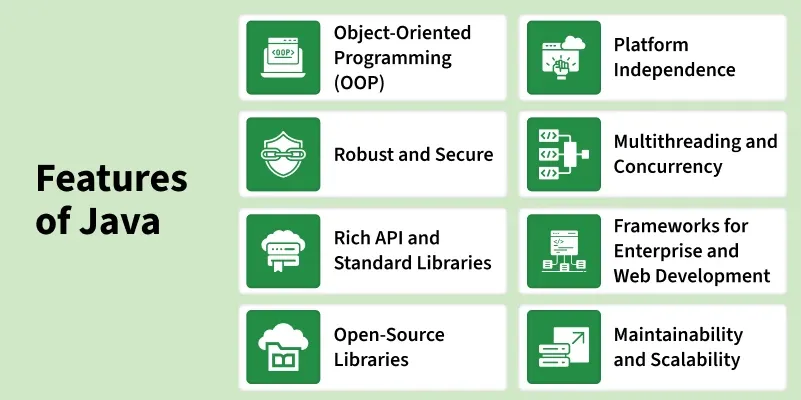
1. Platform Independence
Java is platform-independent due to the Java Virtual Machine (JVM). Android apps built with Java can run across different devices without requiring major changes, which ensures a consistent user experience.
2. Object-Oriented Programming
Java’s object-oriented approach encourages modular and reusable code, making app development and maintenance more efficient. Features like encapsulation, inheritance, and polymorphism allow developers to design scalable and maintainable apps.
3. Extensive Libraries and Tools
Java offers a rich set of libraries and development tools for building Android apps. These include APIs for networking, data management, UI design, and more, enabling developers to implement complex functionality efficiently.
4. Robust Security Features
Java provides built-in security features like access control, secure class loading, and memory management. Combined with Android’s security framework, Java helps developers build apps resistant to vulnerabilities and data breaches.
| Feature | Purpose | Benefit for Android Apps |
|---|---|---|
| Garbage Collection | Automatic memory management | Reduces memory leaks and improves app stability |
| Exception Handling | Manages runtime errors | Prevents crashes and improves reliability |
| Security APIs | Supports encryption and access control | Protects sensitive user data |
| Multithreading | Handles concurrent processes | Improves app responsiveness and performance |
Java and Android SDK
The Android Software Development Kit (SDK) is tightly integrated with Java. This allows developers to:
- Access Android APIs for UI, data storage, and network communication
- Leverage Java development tools like Eclipse, IntelliJ IDEA, and Android Studio
- Build efficient, responsive, and visually appealing apps
Java for Enterprise-Grade Android Apps

Many enterprise applications rely on Java due to its:
- Scalability for handling large user bases
- Compatibility with legacy systems and backend services
- Support for robust testing frameworks like JUnit and TestNG
Java vs Kotlin: Maintaining Relevance
While Kotlin offers modern syntax and features, Java remains critical for Android due to its:
| Aspect | Java | Kotlin |
|---|---|---|
| Code Maturity | Proven over 20+ years with large-scale adoption | Relatively new, 2011 release |
| Community Support | Large, active community with extensive resources | Growing rapidly but smaller than Java |
| Interoperability | Works seamlessly with Android SDK | Fully interoperable with Java |
| Performance | Optimized JVM performance | Slightly slower compilation than Java |
| Learning Curve | Widely taught, easier for beginners to find resources | Modern syntax may require learning new constructs |
Security and Reliability in Java Android Apps
Java helps Android developers build secure applications through:
- Strict type checking to prevent runtime errors
- Built-in access control for classes and methods
- Strong encryption libraries for secure data transmission
Combined with secure coding practices, Java apps can handle sensitive user data and transactions reliably, making it a trusted choice for Android applications.
Best Practices for Java Android Development
- Follow object-oriented design principles for modular code
- Use dependency injection frameworks like Dagger for maintainability
- Implement proper exception handling and logging
- Optimize memory and performance using profiling tools
- Keep libraries and SDKs up-to-date
CTA – Partner with Expert Java Developers
Looking to build high-quality, reliable Android applications using Java? Trust the experts at Developers App India BM Coder to deliver robust solutions.
- Email us at: [email protected]
- WhatsApp: +91 95869 79730
Conclusion
Java remains a cornerstone of Android development, offering reliability, scalability, and security for applications of all sizes. Its mature ecosystem, extensive libraries, and robust features ensure that Android apps continue to perform efficiently and securely. By leveraging Java, businesses can build apps that are maintainable, enterprise-ready, and capable of delivering seamless user experiences.
Partner with Developers App India BM Coder to harness the power of Java and create Android applications that stand the test of time.
Blog ID: 1370Author: parth
Date: 02-04-2026
We to code. It's our passion










you can also reach us at our given
email address or phone number.