In a hyper-connected world, it’s easy to assume that reliable internet access is universal. However, vast regions across the globe—including rural areas, industrial zones, and field operations—still struggle with inconsistent or nonexistent connectivity. This is where offline-first mobile app development emerges as a critical solution.
Offline-first apps are designed to function seamlessly without constant internet access, ensuring uninterrupted user experience and, more importantly, data reliability. Whether it’s healthcare workers in rural villages, logistics teams in transit, or surveyors in remote terrains, offline-first architecture guarantees that data is captured, stored, and synchronized efficiently.
If you're looking to build robust solutions for such environments, explore our mobile app development designed specifically for high-performance and resilient applications.
What is an Offline-First App?
An offline-first app prioritizes local data storage and processing before syncing with the cloud. Unlike traditional apps that depend heavily on network connectivity, offline-first applications are built with the assumption that connectivity may be unreliable or unavailable.
This means users can continue working, entering data, or accessing information even when offline. Once connectivity is restored, the app synchronizes data with remote servers.
Why Data Reliability Matters in Remote Locations
Data reliability is not just a technical concern—it’s a business-critical requirement. In remote environments, unreliable data can lead to:
- Operational inefficiencies
- Data loss
- Delayed decision-making
- Compliance risks
- Customer dissatisfaction
Offline-first apps eliminate these risks by ensuring that data is always accessible and safely stored, regardless of connectivity conditions.
Core Principles of Offline-First Architecture
| Principle | Description |
|---|---|
| Local Data Storage | All critical data is stored locally on the device. |
| Sync Mechanism | Data is synced with the server when connectivity is available. |
| Conflict Resolution | Handles data conflicts during synchronization intelligently. |
| Resilient UI | User interface works seamlessly regardless of connectivity. |
| Data Integrity | Ensures no data is lost or corrupted during offline operations. |
How Offline-First Apps Ensure Data Reliability
1. Local Database Storage
Offline-first apps rely heavily on local databases such as SQLite, Realm, or IndexedDB. These databases allow apps to store structured data directly on the device.
Benefits:
- Instant data access
- No dependency on network
- Improved performance
2. Smart Synchronization Strategies
Synchronization is the backbone of offline-first systems. Apps use strategies like:
- Background sync
- Incremental updates
- Delta sync (only changed data)
| Sync Type | Use Case |
|---|---|
| Real-time Sync | When connectivity is stable |
| Deferred Sync | When connectivity is intermittent |
| Manual Sync | User-triggered updates |
3. Conflict Resolution Mechanisms
When multiple users or devices modify the same data offline, conflicts can arise. Offline-first apps handle this through:
- Last-write-wins strategy
- Version control systems
- User-assisted conflict resolution
4. Data Caching Techniques
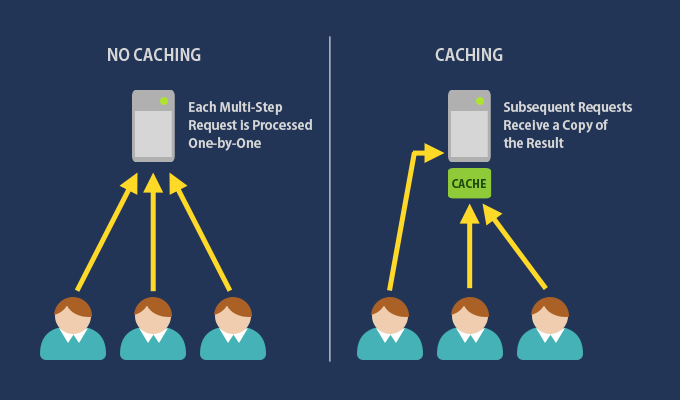
Caching ensures that frequently accessed data is readily available without repeated server calls. This improves both performance and reliability.
5. Queue-Based Data Handling
Offline actions are stored in queues and executed once the network is restored. This ensures that no user action is lost.
6. Robust Error Handling
Offline-first apps are designed to gracefully handle failures, ensuring data integrity even during unexpected crashes or interruptions.
Key Technologies Used in Offline-First Development
| Technology | Purpose |
|---|---|
| SQLite | Local relational database |
| Realm | Mobile database for real-time apps |
| Firebase | Backend with offline capabilities |
| Service Workers | Enable offline support in web apps |
| PouchDB | Sync-enabled database |
Use Cases of Offline-First Apps
1. Healthcare
Doctors and health workers in rural areas can record patient data without internet access.
2. Logistics & Transportation
Drivers can update delivery status even in low-network zones.
3. Field Services
Technicians can log maintenance data in remote locations.
4. Agriculture
Farmers can track crop data and access advisory services offline.
5. Survey & Data Collection
Researchers can collect data in remote terrains without worrying about connectivity.
Challenges in Offline-First Development
While powerful, offline-first apps come with their own set of challenges:
- Complex synchronization logic
- Data conflict handling
- Storage limitations on devices
- Security concerns for local data
- Testing across multiple network conditions
Best Practices for Building Offline-First Apps
- Design with offline as the default state
- Minimize data payloads
- Implement efficient sync strategies
- Use encryption for local storage
- Test extensively under poor network conditions
Offline-First vs Online-Only Apps
| Feature | Offline-First Apps | Online-Only Apps |
|---|---|---|
| Data Access | Available offline | Requires internet |
| Performance | Faster | Depends on network |
| Reliability | High | Low in poor connectivity |
| User Experience | Seamless | Interrupted offline |
The Future of Offline-First Applications
As businesses expand into remote and underserved regions, offline-first apps will become the standard rather than the exception. With advancements in edge computing, AI-driven sync, and progressive web apps (PWAs), the capabilities of offline-first solutions will only grow stronger.
Organizations that adopt this approach early will gain a competitive edge by delivering reliable, high-performance user experiences regardless of network conditions.
Why Choose BM Coder for Offline-First App Development?
At Developers App India BM Coder, we specialize in building resilient, scalable, and high-performance mobile applications tailored for real-world challenges. Our expertise in offline-first architecture ensures that your app performs flawlessly—even in the most demanding environments.
We combine cutting-edge technology with user-centric design to deliver solutions that are not only reliable but also intuitive and efficient.
Get Started Today
If you're planning to build an offline-first application or want to upgrade your existing app for better reliability, we’re here to help.
Conclusion
Offline-first apps are no longer a luxury—they are a necessity for businesses operating in environments with unreliable connectivity. By prioritizing local data storage, intelligent synchronization, and robust error handling, these apps ensure that data remains accurate, accessible, and secure at all times.
Whether you're in healthcare, logistics, agriculture, or field services, adopting an offline-first approach can significantly enhance your operational efficiency and user satisfaction.
Partner with BM Coder to build future-ready applications that work anytime, anywhere.
Blog ID: 1463Author: parth
Date: 22-04-2026
We to code. It's our passion










you can also reach us at our given
email address or phone number.