In an era where mobile applications handle sensitive user data, financial transactions, and personal communications, security is no longer an afterthought—it is a necessity. With cyber threats becoming more sophisticated and frequent, businesses must adopt a proactive approach to safeguarding their applications. This is where security-first engineering comes into play.
At Developers App India, we prioritize building secure mobile applications from the ground up. By embedding security practices throughout the development lifecycle, we ensure your app remains resilient against evolving cyber threats.
👉 Looking for robust mobile application security solutions? Our experts design and implement advanced protection strategies to keep your app and user data safe.
What Is Security-First Engineering?
Security-first engineering is a development approach where security is integrated into every phase of the software development lifecycle (SDLC). Instead of addressing vulnerabilities after deployment, this methodology focuses on preventing risks during design, development, testing, and deployment.
Core Principles:
- Proactive threat identification
- Secure coding practices
- Continuous monitoring and testing
- Data protection and encryption
- Compliance with industry standards
Why Mobile App Security Is Critical
Mobile applications are prime targets for cybercriminals due to the vast amount of sensitive data they handle. From login credentials to financial information, the stakes are high.
| Risk Area | Impact Without Security | With Security-First Engineering |
|---|---|---|
| User Data | Data breaches | Encrypted and protected |
| Transactions | Fraud and theft | Secure payment processing |
| Reputation | Loss of trust | Strong brand credibility |
| Compliance | Legal penalties | Regulatory compliance |
Common Cyber Threats to Mobile Applications
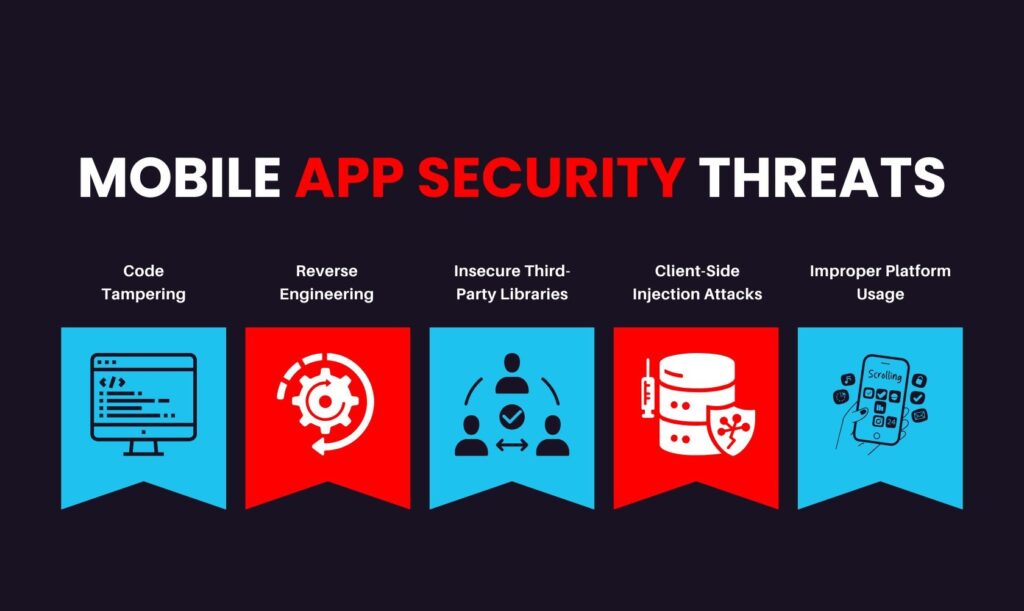
1. Malware Attacks
Malicious software designed to infiltrate and damage applications or steal data.
2. Phishing Attacks
Fake interfaces trick users into revealing sensitive information.
3. Data Leakage
Unintentional exposure of sensitive data due to weak security practices.
4. Man-in-the-Middle (MITM) Attacks
Attackers intercept communication between the app and server.
5. Reverse Engineering
Hackers analyze app code to discover vulnerabilities.
| Threat | Description | Prevention Strategy |
|---|---|---|
| Malware | Infects app systems | Secure code and scanning |
| Phishing | Fake user interfaces | Strong authentication |
| Data Leakage | Exposed sensitive data | Encryption |
| MITM | Intercepted communication | HTTPS & SSL pinning |
| Reverse Engineering | Code analysis by attackers | Code obfuscation |
Key Components of Security-First Mobile App Development
1. Secure Architecture Design
Designing a robust architecture that minimizes vulnerabilities and ensures safe data flow.
2. Data Encryption
Encrypting sensitive data both in transit and at rest using advanced encryption standards.
3. Authentication & Authorization
Implementing secure login systems such as OAuth, biometric authentication, and multi-factor authentication (MFA).
4. Secure APIs
Ensuring APIs are protected against unauthorized access and attacks.
5. Code Obfuscation
Making code difficult to reverse engineer.
Security Best Practices for Mobile Apps
- Use HTTPS for all communications
- Implement strong password policies
- Regularly update libraries and dependencies
- Conduct penetration testing
- Use secure storage for sensitive data
- Enable session management
Security Testing Methods
| Testing Type | Purpose |
|---|---|
| Static Testing (SAST) | Analyze code for vulnerabilities |
| Dynamic Testing (DAST) | Test running application |
| Penetration Testing | Simulate real attacks |
| Vulnerability Scanning | Identify weak points |
Role of DevSecOps in Security-First Engineering
DevSecOps integrates security into the DevOps pipeline, ensuring continuous security checks throughout development.
Benefits:
- Faster vulnerability detection
- Automated security testing
- Continuous monitoring
- Improved collaboration between teams
Compliance and Regulations
Mobile apps must comply with various regulations to ensure data protection and privacy.
| Regulation | Purpose |
|---|---|
| GDPR | Data protection and privacy |
| PCI DSS | Secure payment processing |
| HIPAA | Healthcare data security |
Real-World Applications of Security-First Engineering
1. Banking Apps
Require advanced encryption and authentication to protect financial data.
2. E-commerce Apps
Secure payment gateways and user data protection are critical.
3. Healthcare Apps
Ensure compliance with strict data privacy regulations.
4. Social Media Apps
Protect user data and prevent unauthorized access.
Future Trends in Mobile App Security
- AI-driven threat detection
- Biometric authentication advancements
- Zero-trust security models
- Blockchain-based security
- Cloud-native security solutions
Why Choose BM Coder for Mobile App Security?
At BM Coder – Developers App India, we follow a security-first approach to protect your mobile applications from cyber threats.
- End-to-end security implementation
- Advanced encryption techniques
- Regular security audits
- Secure API development
- 24/7 monitoring and support
🔐 Secure Your Mobile App Today
Don’t wait for a breach to take action. Protect your application with industry-leading security practices.
Conclusion
Security-first engineering is essential for protecting mobile applications in today’s threat landscape. By integrating security at every stage of development, businesses can prevent vulnerabilities, protect user data, and maintain trust.
Investing in mobile app security is not just about compliance—it’s about ensuring long-term success and resilience. Partner with BM Coder to build secure, scalable, and future-ready mobile applications.
Stay secure, stay ahead, and deliver trust with every interaction.
Blog ID: 1175Author: parth
Date: 19-03-2026
We to code. It's our passion










you can also reach us at our given
email address or phone number.