
In the fast-paced digital era, mobile apps are no longer just an accessory for businesses—they are the primary channel for global engagement. Crafting a successful mobile application that scales internationally while maintaining top-tier security is both an art and a science. It requires advanced architectural design, robust backend systems, and a seamless user experience.
If your business aims to develop globally scalable mobile applications, our team at Developers App India BM Coder specializes in comprehensive mobile app development services. Reach out to us via Email: [email protected] or WhatsApp +91.9586979730 to discuss your project.
Understanding the Core Requirements of a Global Mobile App
Before building an app for a global audience, it is crucial to understand the fundamental requirements that make an app scalable and secure:
- High concurrency support for millions of simultaneous users
- Data privacy and protection across multiple jurisdictions
- Rapid response time and minimal latency
- Continuous integration and deployment capabilities
- Fault tolerance and disaster recovery mechanisms
A mobile application is not just about the front-end interface; it’s an entire ecosystem comprising backend services, APIs, databases, cloud infrastructure, and security frameworks.
Key Components of Globally Scalable Mobile Apps
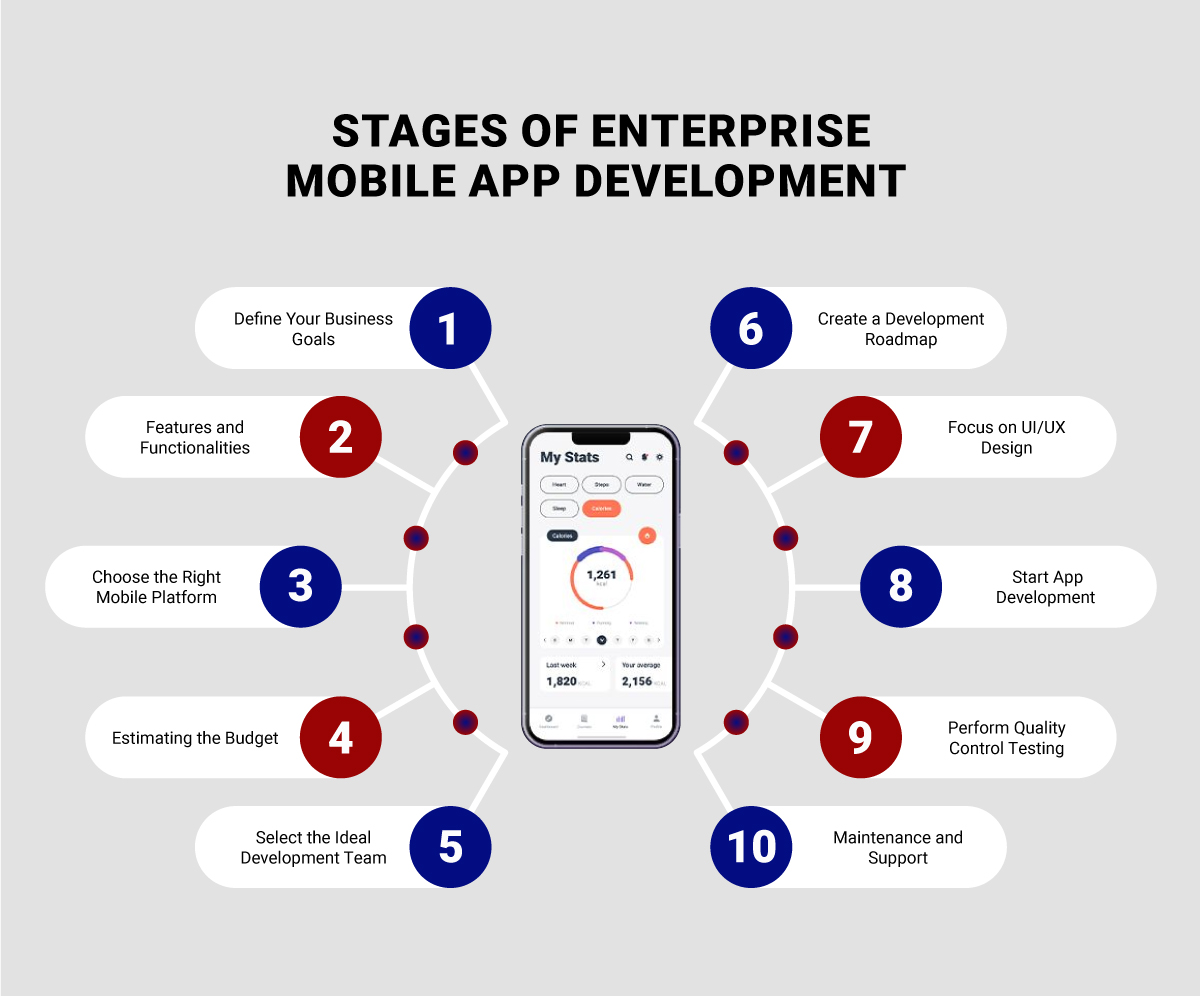
The architecture of a high-performing mobile app involves multiple layers. Here’s an overview:
| Component | Role | Typical Technologies |
|---|---|---|
| Frontend UI | User interaction and experience | React Native, Flutter, Swift, Kotlin |
| API Layer | Connects frontend to backend services securely | REST, GraphQL, WebSockets |
| Backend Services | Handles business logic, transactions, notifications | Node.js, Python, Java, .NET |
| Database Layer | Persistent storage, high availability, distributed data | PostgreSQL, MongoDB, Redis, Cassandra |
| Cloud Infrastructure | Global deployment, auto-scaling, fault tolerance | AWS, Azure, GCP, Kubernetes |
| Security & Compliance | Data encryption, authentication, access control | OAuth, JWT, SSL/TLS, PCI DSS, GDPR frameworks |
| Analytics & Monitoring | User behavior tracking, performance monitoring | Firebase, Google Analytics, ELK Stack, Prometheus |
Layer 1: Frontend and User Experience
Successful mobile apps prioritize seamless user experience (UX) across devices. Developers often use cross-platform frameworks like React Native or Flutter to minimize development time while ensuring native performance. Key aspects include:
- Responsive design supporting multiple screen sizes
- Fast load times through optimized assets and lazy loading
- Intuitive navigation and micro-interactions
- Offline mode and caching for slow network conditions
Performance Optimization
Optimizing the frontend includes minimizing API calls, compressing images, prefetching data, and using background workers for heavy computations. Smooth animations and low latency are critical for retaining global users.
Layer 2: Backend Architecture
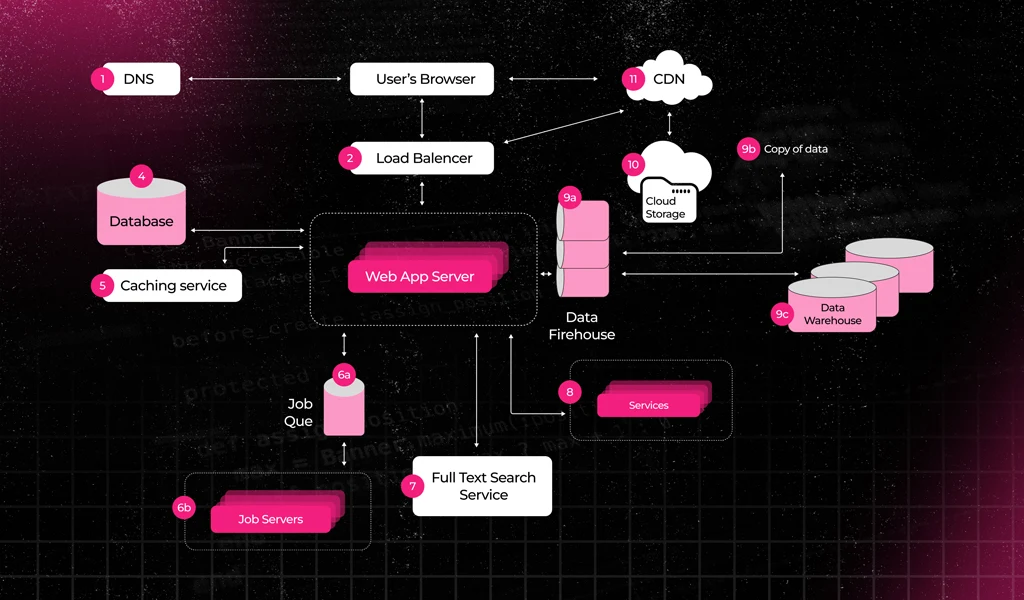
The backend must be robust, scalable, and secure. This is typically achieved via a microservices architecture, where each service is responsible for a specific function such as:
- User authentication and authorization
- Push notifications and messaging
- Payment processing and wallet management
- Content delivery and personalization
Microservices are often containerized using Docker and orchestrated with Kubernetes for efficient scaling and deployment across multiple regions.
Layer 3: APIs and Integration
APIs serve as the backbone of communication between frontend and backend systems. Best practices include:
- Using REST or GraphQL depending on data needs
- Rate limiting to prevent abuse
- Authentication via OAuth2 or JWT tokens
- Data validation and versioning for backward compatibility
Layer 4: Database & Data Management
Global mobile apps require a highly available, low-latency database system. Hybrid architectures often combine SQL and NoSQL databases:
| Data Type | Database Type | Reason |
|---|---|---|
| User Profiles | SQL (PostgreSQL, MySQL) | ACID compliance and transaction integrity |
| App Content & Logs | NoSQL (MongoDB, Cassandra) | Flexible schema and high scalability |
| Session & Cache | In-memory (Redis, Memcached) | Ultra-fast read/write for active users |
Layer 5: Cloud Infrastructure and Global Deployment
Cloud providers such as AWS, Azure, and GCP provide tools to deploy apps globally with minimal latency. Core practices include:
- Content Delivery Networks (CDNs) for static assets
- Auto-scaling groups to handle peak traffic
- Load balancing across multiple regions
- Geo-redundant deployments for disaster recovery
A well-architected cloud setup ensures continuous uptime and rapid scaling during global campaigns or viral growth.
Layer 6: Security & Compliance

Security is non-negotiable in global apps. Considerations include:
- End-to-end encryption (TLS/SSL) for all data transfers
- Secure authentication (OAuth2, Multi-Factor Authentication)
- Data masking and tokenization for sensitive data
- Compliance with GDPR, CCPA, HIPAA, and regional privacy laws
- Regular penetration testing and security audits
A strong security foundation builds user trust and ensures regulatory compliance across multiple jurisdictions.
Monitoring, Analytics, and Optimization
Continuous monitoring is essential to detect performance bottlenecks and user behavior trends. Key components:
- Application performance monitoring (APM) using New Relic or AppDynamics
- User analytics using Google Analytics, Firebase, or Mixpanel
- Error tracking and logging (ELK Stack, Sentry)
- Automated alerts for anomalies in traffic or errors
Data-driven decisions help engineers optimize code paths, database queries, and UI/UX for a global audience.
Comparison: Monolithic vs Microservices Architecture
| Aspect | Monolithic Apps | Microservices Apps |
|---|---|---|
| Scalability | Difficult to scale independently | Each service scales independently |
| Deployment | All-in-one release | Continuous deployment possible |
| Fault Isolation | One failure can affect entire app | Failure is isolated to service |
| Development Speed | Slower with multiple teams | Faster, parallel development possible |
Conclusion: Building Future-Proof Mobile Applications
Successfully engineering a mobile app for global scale and security requires meticulous planning, layered architecture, and adherence to best practices. From frontend performance to backend resilience, global deployment strategies, and robust security compliance, every aspect must work in harmony.
If you want to develop world-class mobile applications that scale globally and meet the highest security standards, our expert team can help. Contact us for specialized mobile application development today:
📧 Email: [email protected]
📱 WhatsApp: +91.9586979730
Author: parth
Date: 17-03-2026
We to code. It's our passion










you can also reach us at our given
email address or phone number.