The healthcare industry is undergoing one of the most significant digital transformations in modern business. From telemedicine platforms and patient portals to wearable health integrations, electronic medical records, AI-powered diagnostics, and hospital management systems, healthcare organizations are increasingly relying on software solutions to improve care delivery, patient engagement, and operational efficiency.
However, building healthcare applications is fundamentally different from developing generic business apps. Healthcare software must meet stringent regulatory requirements, maintain robust data security, support medical workflows, integrate with existing healthcare infrastructure, and deliver exceptional reliability.
For healthcare providers, startups, clinics, hospitals, and healthtech enterprises, hiring the right development team is one of the most critical decisions in ensuring long-term success. Choosing developers without healthcare-specific expertise can result in compliance failures, security risks, inefficient workflows, and costly redevelopment.
If you are planning to build a secure, scalable, and regulation-compliant healthcare solution, partnering with experienced healthcare app developers is essential for achieving clinical, operational, and business success.
Why Healthcare App Development Requires Specialized Expertise
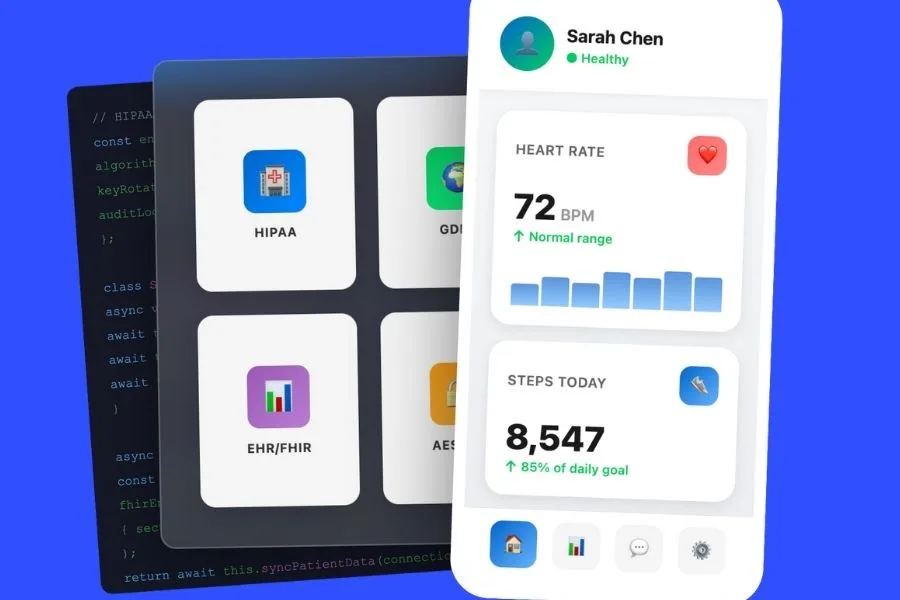
Healthcare applications operate in highly regulated environments where patient safety, privacy, and reliability are non-negotiable. Unlike standard applications, healthcare software often handles:
- Protected Health Information (PHI)
- Electronic Health Records (EHR)
- Insurance claims data
- Prescription systems
- Medical imaging
- Lab integrations
- Appointment management
- Telehealth communications
Because of this complexity, developers must understand:
- HIPAA compliance
- GDPR regulations
- FHIR and HL7 standards
- Medical interoperability
- Clinical workflows
- Healthcare UX principles
Key Qualities to Look for When Hiring Healthcare App Developers
1. Regulatory Compliance Knowledge
Healthcare developers must understand industry regulations and privacy laws that govern healthcare systems.
| Compliance Standard | Purpose | Importance |
|---|---|---|
| HIPAA | Protect patient health data in the US | Mandatory for US healthcare apps |
| GDPR | Protect EU patient data privacy | Required for global platforms |
| HL7 | Healthcare data exchange standard | Interoperability |
| FHIR | Modern healthcare API standard | System integration |
Developers unfamiliar with these standards may create software that exposes organizations to legal penalties or operational failures.
2. Security-First Development Approach
Healthcare applications are prime targets for cyberattacks due to the value of medical data. Developers should prioritize:
- End-to-end encryption
- Role-based access control
- Secure authentication
- Audit logging
- Data backup strategies
- Secure API architecture
- Penetration-tested infrastructure
Security is not optional—it is foundational.
3. Experience with Healthcare Integrations
Healthcare software often needs to integrate with:
- EHR/EMR systems
- Pharmacy systems
- Insurance verification tools
- Medical devices
- Lab systems
- Telemedicine APIs
- Payment systems
Experienced developers can build interoperable systems that fit within broader healthcare ecosystems.
Technical Skills Required for Healthcare Development
Healthcare app developers should possess expertise across multiple technology layers.
| Technical Area | Required Expertise |
|---|---|
| Frontend Development | React, Angular, mobile app frameworks |
| Backend Development | Node.js, Python, Java, .NET |
| Cloud Infrastructure | AWS, Azure, HIPAA-compliant hosting |
| Database Management | Secure relational and NoSQL systems |
| API Development | FHIR, HL7, RESTful APIs |
| Cybersecurity | Encryption, identity management |
Importance of Healthcare User Experience (UX)
Healthcare users include:
- Patients
- Doctors
- Nurses
- Administrative staff
- Insurance coordinators
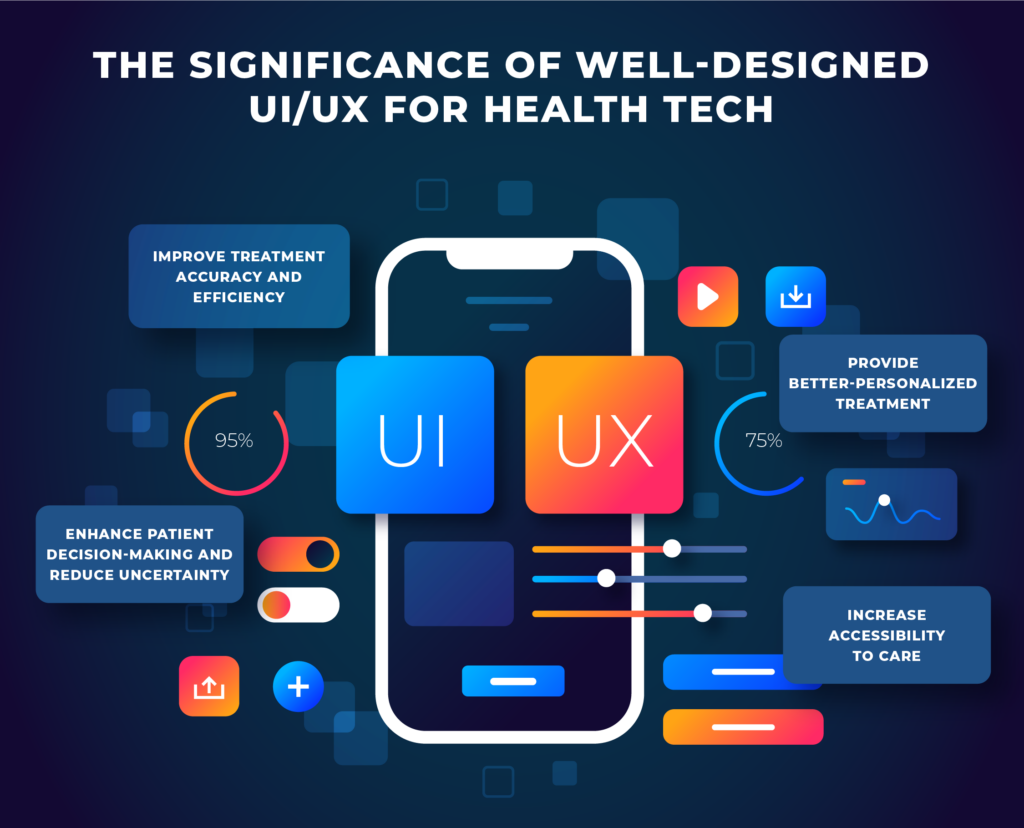
Each user group requires intuitive workflows. Strong healthcare developers should design software that:
- Reduces clinician burnout
- Simplifies patient interactions
- Supports accessibility standards
- Improves treatment coordination
- Minimizes administrative errors
Questions to Ask Before Hiring Healthcare Developers
- Have you developed HIPAA-compliant applications before?
- What healthcare systems have you integrated with?
- How do you ensure patient data security?
- Do you understand FHIR and HL7?
- Can you provide healthcare project case studies?
- What is your approach to scaling healthcare systems?
- How do you handle post-launch maintenance?
Custom Development vs Generic Software Agencies
Generic agencies may build apps, but healthcare requires domain-specific expertise.
| Criteria | Generic Developers | Healthcare Specialists |
|---|---|---|
| Compliance Expertise | Limited | High |
| Medical Workflow Knowledge | Basic | Advanced |
| Integration Capability | Moderate | Healthcare-focused |
| Security Standards | General | Clinical-grade |
| Scalability for Healthcare | Variable | Purpose-built |
Red Flags to Avoid
When hiring developers, watch for:
- No healthcare portfolio
- Poor security understanding
- No compliance knowledge
- Lack of interoperability experience
- Overpromising unrealistic timelines
- Weak documentation processes
- No long-term support plans
Scalability and Future-Proofing
Healthcare technology evolves rapidly. Developers should build systems that support:
- AI integration
- Remote patient monitoring
- Wearable device expansion
- Multi-location scaling
- Cloud growth
- Data analytics
Future-ready architecture protects long-term investments.
Post-Launch Support Matters
Healthcare applications require ongoing support for:
- Security updates
- Regulatory changes
- Performance monitoring
- Feature upgrades
- Compliance audits
- System integrations
Reliable developers should offer maintenance strategies beyond initial deployment.
Benefits of Hiring the Right Healthcare Development Team
- Regulatory confidence
- Improved patient safety
- Operational efficiency
- Scalable infrastructure
- Higher patient trust
- Reduced long-term costs
- Competitive market advantage
Why BM Coder Is a Strong Partner for Healthcare Development
Developers App India BM Coder specializes in building secure, scalable, and compliance-driven healthcare software solutions for:
- Hospitals
- Clinics
- Telemedicine providers
- Pharmacy platforms
- Fitness and wellness apps
- Healthcare SaaS businesses
With expertise in healthcare regulations, advanced technologies, and user-centered development, BM Coder helps organizations create solutions that improve care delivery while supporting long-term business growth.
Hire Expert Healthcare App Developers Today
Looking to build secure, compliant, and scalable healthcare software? Developers App India BM Coder provides specialized healthcare development services tailored to your business goals.
Email: [email protected]
WhatsApp: +91 9586979730
Conclusion
Hiring developers for healthcare applications is a strategic decision that directly impacts patient safety, operational performance, legal compliance, and business scalability. Healthcare organizations must prioritize developers with domain expertise, regulatory knowledge, security-first architecture, and proven healthcare experience.
By carefully evaluating technical capabilities, healthcare specialization, integration expertise, and long-term support, organizations can build digital healthcare solutions that are resilient, scalable, and patient-centered.
In an industry where trust, precision, and compliance are paramount, choosing the right healthcare app development partner is one of the most important investments your organization can make.
Blog ID: 1500Author: parth
Date: 29-04-2026
We to code. It's our passion








you can also reach us at our given
email address or phone number.